
Crypto trading can feel overwhelming without the right tools in your corner. The market moves fast, and keeping up with prices, spotting trends, and timing your trades takes more than just crossing your fingers.
Crypto trading tools help traders track assets, analyze market data, and execute strategies automatically, cutting out those knee-jerk decisions that often cost money.

These tools run the gamut from simple portfolio trackers to advanced bots that never sleep. Some are all about research and analysis, others handle security or even tax headaches.
Every tool has its own job, making trading smoother and, honestly, less nerve-wracking. The right mix can be the difference between guessing and making choices based on hard data.
Whether you’re brand new or have been around the block, knowing which crypto tools fit your trading style keeps you sharp in a market that never sits still.
Key Takeaways
- Crypto trading tools help keep emotions out of your process and bring consistency to your strategies
- There are tools for everything—portfolio tracking, automated trading, and deep market analysis
- Picking the right tools means matching features to your goals and your level of experience
Types of Crypto Trading Tools
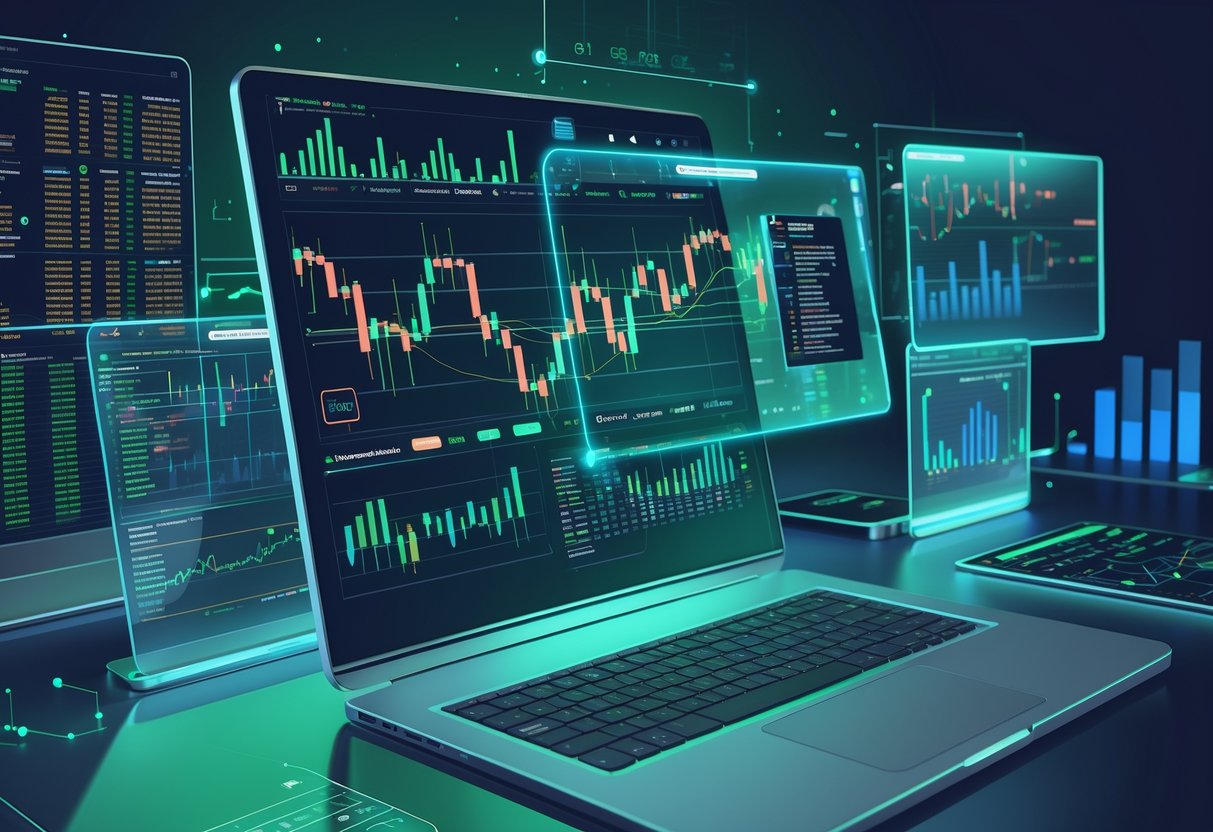
Traders reach for different tools to manage investments, analyze prices, automate trades, and test out ideas. Each type plays a part in building a solid trading routine.
Portfolio Trackers
Portfolio trackers let you see all your crypto holdings—across exchanges and wallets—in one spot. They usually sync up with your accounts to show real-time values, gains, losses, and how your portfolio is holding up.
Most portfolio management tools keep tabs on your transaction history and average buy prices. Visuals like charts and graphs make it a lot easier to spot your winners and laggards.
Handy extras include price alerts, tax reports, and the ability to group assets however you like. Some even track your performance over months or years.
Advanced options let you add manual entries for offline wallets or trades outside the usual exchanges. Free versions usually have limits, while paid ones unlock more analytics and unlimited tracking.
Price Charting Platforms
Price charting platforms help you visualize crypto price action over time. Traders use these to spot patterns and suss out when to jump in or bail out.
Candlestick charts and patterns are the bread and butter—showing open, close, highs, and lows for each period. They make it easier to catch trends or sudden reversals.
Most charting tools come loaded with indicators like moving averages, RSI, MACD, and Bollinger Bands. You can stack indicators or draw on the charts to map out support, resistance, or trend lines.
Pro platforms might offer multiple chart layouts, custom timeframes, and all sorts of tweaks. Some even let you share your analysis with other traders, which is great if you like bouncing ideas around.
Trading Bots
Trading bots are automated programs that buy and sell based on rules you set. They run 24/7, which is a lifesaver since crypto markets never close.
Bots can follow strategies you create or use templates—think dollar-cost averaging, grid trading, or arbitrage. They keep an eye on prices and act when your criteria are met.
You pick the investment amount, price targets, stop losses, and which pairs to trade. Some bots are smart enough to adapt as markets shift, even using AI to tweak strategies.
Still, risk management is huge here. It’s smart to start small and test thoroughly. Volatile markets or buggy APIs can cause losses if you’re not careful.
Backtesting Software
Backtesting software lets you try out strategies on old price data—no real money at risk. It shows how your plan would have worked in the past.
The software simulates trades over months or years and spits out stats like total return, win rate, and risk-to-reward ratio. Super useful for seeing if your strategy has legs.
Good backtesting tools factor in trading fees, slippage, and execution delays. Without those, results can look way better than reality. You can tweak parameters and rerun tests to dial things in.
Things to keep in mind:
- Past results don’t always predict the future
- Markets change—a lot
- Overfitting your strategy to history can backfire in real trading
Most crypto trading platforms now offer some backtesting. Dedicated software gives you more detail and supports complex setups.
Key Features of Effective Trading Tools

To make smart moves and keep your funds safe, trading tools need the right features. The big ones? Live market data, solid protection, and notification systems that keep you in the loop when prices get wild.
Real-Time Data Integration
Live data is the lifeblood of crypto trading. Prices can change in a heartbeat, so even a short delay can cost you.
Good trading platforms pull data straight from exchanges and blockchains. You get up-to-the-second prices, volume, and order book info—no need to keep refreshing.
Access to multiple data streams is a must. A solid tool shows prices from different exchanges, tracks history, and overlays technical indicators. That way, you can spot trends and time your trades better.
Risk Management Capabilities
Risk controls help you avoid big losses and protect your capital. Stop-loss orders sell your crypto automatically if prices drop too far. Take-profit orders let you lock in gains.
Portfolio tools show your total investment and how much is on the line. Calculators help you size positions based on your account and risk appetite.
Some tools offer trailing stops that move with the market, or even portfolio rebalancing to keep your allocations on target.
Customizable Alerts
Alerts keep you posted without staring at charts all day. Set price alerts for when an asset hits your target, or volume alerts for sudden spikes in activity.
You can set up alerts for technical indicators—like if RSI crosses a certain level—or even for news events. Notifications can ping you by email, text, or straight to your phone.
The best alert systems let you control how often and how urgently you get notified. That way, you won’t get overwhelmed, but you also won’t miss the big stuff.
How to Choose Crypto Trading Tools

Strong security, an easy-to-use interface, and support for your exchanges—those are the pillars of a solid crypto trading tool.
Security Considerations
Security is non-negotiable when picking crypto trading tools. Look for two-factor authentication (2FA) to add a layer beyond passwords. End-to-end encryption keeps your API keys and personal info safe from prying eyes.
Be careful with API permissions. Portfolio trackers usually only need read-only access. Bots might need limited trading permissions, but never give withdrawal rights unless you absolutely have to.
Reputable tools get audited by third parties. These checks catch issues before hackers do. Also, check if the tool actually holds your funds or just connects to exchanges—less risk if they don’t hold your money.
If private keys are involved, cold storage is a must. The safest platforms keep most assets offline. Bug bounty programs are a good sign—they reward people for finding bugs before the bad guys do.
User Experience and Interface
A clean, simple interface helps you act fast and avoid mistakes. Good tools fit your skill level—beginners want clear labels and tooltips, while pros need customizable layouts and deep data.
Mobile-friendly design is huge. You want to trade or check your positions from anywhere, right? Apps should load fast and look good, even on your phone.
Navigation speed matters. No one likes lag when the market’s moving. Fast search and keyboard shortcuts also save time.
Trying a demo or free trial is smart—it shows if the workflow fits you before you spend a dime.
Compatibility Across Exchanges
Managing all your trades from one place is just easier. Tools that support multiple exchanges mean less bouncing between sites. Always double-check your favorite exchanges are supported.
API integration isn’t always equal. Some tools work great with big names like Binance or Coinbase, but not so much with smaller exchanges. If you’re running bots, connection stability is a big deal.
Compatibility checklist:
- Which exchanges are supported?
- How often are APIs updated?
- Is data syncing fast?
- Are all order types available?
- How far back does the historical data go?
Cross-platform syncing is essential. If you make a change on your phone, it should show up on your computer right away. Otherwise, you risk acting on old info.
Popular Crypto Trading Tool Providers
There are a handful of well-known platforms offering all-in-one trading tools. They help you analyze markets, automate trades, and juggle accounts from one dashboard. These providers have built a name for reliability and a deep feature set, whether you’re a newbie or a seasoned pro.
Coinigy
Coinigy gives traders a way to manage over 45 cryptocurrency exchanges from one place. No more logging into each platform separately—pretty convenient, honestly.
The platform comes with professional charting tools and over 75 technical indicators. You can set price alerts, trade across different exchanges, and track your whole portfolio on a single dashboard.
Coinigy charges a monthly fee starting at about $18.66 for the basic features. There’s real-time market data, customizable workspaces, and advanced order types.
Traders juggling accounts on several exchanges find this setup handy for quick strategy execution.
TradingView
TradingView’s kind of a social hub for charting, with more than 50 million users worldwide. It offers advanced technical analysis tools, hundreds of indicators, and a bunch of drawing tools for charting.
Custom indicators? Yep, you can build those using Pine Script, their own programming language. The platform supports both crypto and traditional markets.
People share trading ideas and strategies right there through an integrated social network. TradingView runs in your browser—no downloads needed.
There’s a free version with limited features, and paid plans start at $14.95 a month. Paying gets rid of ads, adds more indicators per chart, and speeds up data updates.
3Commas
3Commas is all about automated trading bots and portfolio management. It hooks up to major exchanges like Binance, Coinbase, and Kraken to run automated strategies.
You can use pre-built bot templates or tweak your own strategies if you want something more tailored. The platform offers DCA bots, grid trading bots, and even options trading tools.
Smart trading features include things like trailing stop losses and take profit targets. There’s also a marketplace where you can copy strategies from more experienced traders.
Subscriptions start at around $22 per month for basic bot access. Backtesting features let you test strategies using historical data before risking your own money.
Integrating Trading Tools with Your Strategy
Successful crypto traders usually match their tools to their own style and goals. The right automation can run trades 24/7, and good analytics show what’s working—or what’s not.
Automation and Scripting
Trading bots execute strategies automatically, so you don’t have to sit at your screen all day. They follow set rules to buy or sell crypto at specific prices or under certain conditions.
Automated trading catches opportunities in different time zones, which is handy if you’d rather sleep than watch charts all night.
You set things like stop-loss, take-profit, and position size, and the bot does the rest. This helps take the emotion out of trading, which—let’s be honest—can be a problem. Emotions and trading don’t mix well.
Common automation features:
- Dollar-cost averaging schedules
- Trailing stop losses
- Grid trading patterns
- Arbitrage execution
Scripting lets more advanced traders build custom strategies using code. You can backtest scripts on historical data before risking anything real. Still, bots are only as smart as their programming—if the market does something wild, they might not keep up.
Analytics and Performance Tracking
Portfolio trackers show your real-time balances across different exchanges and wallets. They calculate your total holdings, profit and loss, and allocation percentages automatically.
This makes it easier to spot which trades are winners and which ones are just draining your capital. Performance metrics like win rate and risk-reward ratio show patterns in your trading behavior.
These numbers help you refine your approach based on actual results—not just gut feelings. Market analysis tools give you data to make better decisions, with charts, volume trends, and technical indicators.
Alert systems ping you when prices hit certain levels or when patterns show up. Saves a ton of time compared to manually checking everything all day.
Frequently Asked Questions
Traders have plenty of questions: which tools are best for analysis, how bots really perform, and what free options are out there. Getting these answers helps both new and seasoned traders make smarter choices.
What are the most effective tools for cryptocurrency analysis?
Most pro traders lean on a few key platforms. TradingView is big for charting and technical indicators. CoinMarketCap tracks prices and market data for thousands of coins.
Portfolio tools like CoinStats let you monitor your holdings across different exchanges, showing real-time prices and performance in one spot.
News aggregators matter, too. Professional crypto news tools usually have higher standards than social media and offer more balanced coverage.
Which cryptocurrency trading bots have the best performance for experienced users?
Trading bots really vary in features and complexity. Advanced bots let experienced traders set up custom strategies using technical indicators and market triggers.
The best bots for pros include backtesting, so you can try strategies on old data before risking real cash. Still, no bot is magic—performance depends a lot on your setup and what the market’s doing.
There’s no guarantee of profit, since crypto markets can be unpredictable even with automation.
How do beginners get started with cryptocurrency trading bots?
If you’re new, don’t rush into automated trading. Manual trading comes first so you can get a feel for the market.
Start simple. Basic bots that just buy or sell based on price moves are easier to understand than complicated algorithms.
Many platforms offer demo or paper trading modes, so you can test bot settings with fake money before going live.
What are the top free tools available for crypto trading?
There are some solid free tools out there. CoinMarketCap gives you price data, market caps, and trading volumes for thousands of assets at no cost.
TradingView’s basic free plan covers essential charting if you’re just learning technical analysis. You get standard indicators and chart types.
CoinStats offers free portfolio tracking across multiple exchanges, so you can monitor your holdings and see your total value without paying anything.
Can you achieve consistent profits with automated crypto trading bots?
Automated bots aren’t a sure thing for consistent profits. Crypto markets are volatile, and even well-set bots can lose money sometimes.
Bots work best as part of a bigger strategy. They’re fast and run 24/7, but they can’t predict big news or market shifts.
Traders who do well with bots usually keep an eye on performance and adjust settings as markets change. Just letting bots run without checking in rarely works out long-term.
What software is essential for professional crypto traders?
Professional traders need comprehensive tools that handle multiple functions. Advanced charting platforms with custom indicators are basically the backbone of any decent analysis.
Secure wallet software is a must for keeping digital assets safe from theft or random hacks. Most pros stick with hardware wallets for long-term storage, then use software wallets when they’re actively trading.
Portfolio management systems that tie into several exchanges really help keep things organized. With these, traders can see all their positions, make trades, and track performance—all in one place.